
-
 By Anandana Nadhavajhala
- 30 Aug 2025
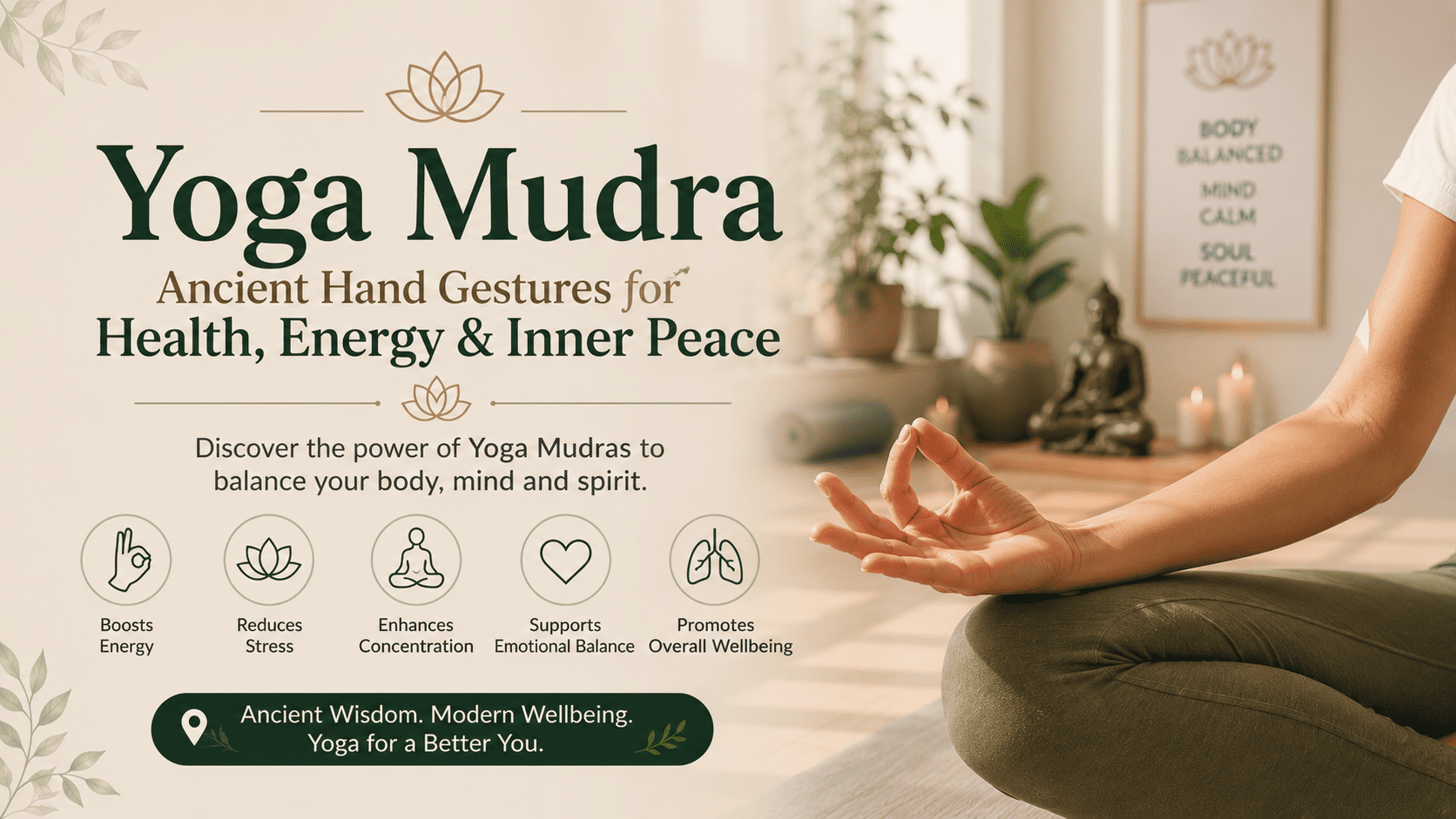
Yoga Mudra: Ancient Hand Gestures for Health, Energy & Inner Peace
1. Introduction: What Are Yoga Mudras?
In the world of yoga, most people are familiar with postures (asanas) and breathing techniques (pranayama). But there is another subtle yet powerful aspect of yoga – mudras.
Mudra literally means a “gesture” or “seal”. In yoga, mudras are special hand positions that channel energy, balance the five elements in the body, and help the mind achieve deep focus. They are often practiced along with meditation and pranayama to enhance mental clarity and inner peace.
2. History & Philosophy of Mudras
Mudras have been used in ancient Vedic rituals, classical yoga, Ayurveda, and even dance forms like Bharatanatyam. Yogic scriptures describe them as powerful tools for connecting the mind, body, and spirit.
According to Ayurveda, the human body is made of five elements (Pancha Tattva):
- Thumb – Fire
- Index finger – Air
- Middle finger – Space (Ether)
- Ring finger – Earth
- Little finger – Water
When these elements become imbalanced, we experience illness or mental stress. Practicing mudras helps restore balance and harmony within.
3. The Science Behind Mudras
From a yogic and scientific perspective, mudras work by stimulating nerve endings, energy channels (nadis), and chakras. The fingertips are full of nerve connections linked to different parts of the brain. By joining, pressing, or bending the fingers in specific ways, mudras activate subtle energy flows, improve blood circulation, and calm the nervous system.
That’s why mudras are often described as “shortcuts to meditation and healing.”
4. Benefits of Practicing Mudras
Regular practice of yoga mudras can bring several benefits:
- Physical Health: Supports digestion, immunity, metabolism, and detoxification.
- Mental Health: Reduces anxiety, stress, and depression while improving focus and concentration.
- Emotional Balance: Creates calmness, positivity, and emotional stability.
- Spiritual Growth: Deepens meditation, enhances self-awareness, and awakens higher consciousness.
5. Top 10 Yoga Mudras and Their Benefits
Now let’s explore the 10 most powerful yoga mudras, their method, and their benefits in detail.
1. Gyan Mudra (Mudra of Knowledge)
How to Do:
- Touch the tip of your index finger with the tip of your thumb.
- Keep the other three fingers extended.
- Rest hands on knees in a meditative posture.
Benefits:
- Enhances concentration, memory, and creativity.
- Calms the mind and reduces stress.
- Excellent for students and people in mental work.
- Deepens meditation practice.
Best Time: Morning meditation or whenever you feel mentally tired.
2. Prana Mudra (Mudra of Vital Energy)
How to Do:
- Touch the tip of the little finger and ring finger to the thumb tip.
- Keep index and middle fingers straight.
Benefits:
- Activates the body’s life force (prana).
- Boosts immunity and energy levels.
- Improves eyesight and overall vitality.
- Helps fight fatigue and weakness.
Best Time: Anytime during the day when you feel low on energy.
3. Apana Mudra (Mudra of Detoxification)
How to Do:
- Touch the tip of the middle finger and ring finger to the thumb tip.
- Keep index and little finger straight.
Benefits:
- Aids in digestion and detoxification.
- Helps in relieving constipation and acidity.
- Promotes healthy elimination of toxins.
- Balances lower abdomen energy.
Best Time: After meals or in the morning for better digestion.
4. Vayu Mudra (Mudra of Air Balance)
How to Do:
- Bend the index finger and press it with the thumb.
- Keep other three fingers straight.
Benefits:
- Balances excess air element in the body.
- Reduces joint pain, arthritis, and bloating.
- Relieves anxiety, restlessness, and nervousness.
- Good for calming overthinking.
Best Time: During anxiety attacks or joint discomfort.
5. Shunya Mudra (Mudra of Emptiness)
How to Do:
- Bend the middle finger and press it with the thumb.
- Keep the other fingers straight.
Benefits:
- Helps with ear pain, vertigo, and balance disorders.
- Reduces numbness and a sense of emptiness.
- Improves mental clarity and calmness.
Best Time: Best practiced when suffering from ear or balance issues.
6. Surya Mudra (Mudra of the Sun)
How to Do:
- Bend the ring finger and press it with the thumb.
- Keep other fingers straight.
Benefits:
- Increases body heat and metabolism.
- Helps in weight loss.
- Reduces cholesterol and aids digestion.
- Boosts energy and reduces laziness.
Best Time: Morning practice for weight loss benefits.
7. Varun Mudra (Mudra of Water Balance)
How to Do:
- Touch the tip of the little finger with the thumb tip.
- Keep other fingers straight.
Benefits:
- Maintains water balance in the body.
- Improves skin health and prevents dryness.
- Relieves dehydration and improves kidney function.
- Gives skin a natural glow.
Best Time: Anytime, especially during dry seasons.
8. Dhyana Mudra (Mudra of Meditation)
How to Do:
- Place both hands on your lap, right hand on left, palms facing upward.
- Join thumbs lightly together to form a triangle.
Benefits:
- Deepens meditation and concentration.
- Brings inner peace and calmness.
- Balances left and right brain functions.
- Connects you to higher consciousness.
Best Time: During meditation or relaxation sessions.
9. Anjali Mudra (Gesture of Prayer/Gratitude)
How to Do:
- Join both palms together at the heart center.
- Fingers pointing upward.
Benefits:
- Symbol of respect, gratitude, and balance.
- Brings harmony between mind and body.
- Helps in centering emotions and reducing stress.
- Commonly used at the beginning and end of yoga practice.
Best Time: Anytime – especially during prayers or yoga sessions.
10. Hakini Mudra (Mudra of the Mind & Memory)
How to Do:
- Bring fingertips of both hands together lightly.
- Keep palms apart, forming a dome shape.
Benefits:
- Improves memory, focus, and brain power.
- Enhances coordination between left and right brain.
- Reduces mental fatigue and confusion.
- Best for students and professionals.
Best Time: During study, work, or meditation.
6. How to Practice Mudras Correctly
- Sit in a comfortable posture – Sukhasana, Padmasana, or even a chair.
- Keep your spine straight and shoulders relaxed.
- Close your eyes and practice slow, deep breathing.
- Hold each mudra for 15–30 minutes daily (can be divided into 3 sessions of 10 minutes).
- Stay consistent for best results.
7. Precautions While Practicing Mudras
-
Avoid over-practice (not more than 45 minutes per mudra per day).
-
Pregnant women and people with chronic conditions should consult a yoga expert.
-
Practice with awareness, not force.
- Choose mudras according to your health needs.
8. Yoga Mudras in Daily Life
The best part about mudras is that they can be done anywhere, anytime – while traveling, sitting in office, or even during meditation. Just a few minutes of practice can calm the mind, reduce stress, and improve energy flow.
At Yoga Sadharm Anandana, we integrate mudras with meditation, pranayama, and asana practice to give students a complete yogic experience. Whether you are in Barnet, Finchley, Totteridge, or East Barnet, our classes help you learn how to apply mudras in your daily routine for better health and peace of mind.
9. Conclusion
Yoga mudras are small gestures with big power. They are easy to practice, require no special equipment, and bring deep transformation when done regularly. By balancing the five elements, mudras help you achieve physical health, mental clarity, and spiritual growth.
Start with simple mudras like Gyan Mudra or Prana Mudra, and slowly explore others to discover their benefits.
10. FAQs on Yoga Mudras
Q1. How long should I practice a mudra daily?
15–30 minutes is ideal, either in one go or divided into sessions.
Q2. Can mudras cure diseases?
Mudras support healing and balance but should not replace medical treatment.
Q3. Can I practice mudras without yoga asanas?
Yes, mudras can be done anywhere, even while sitting on a chair.
Q4. Which mudra is best for beginners?
Gyan Mudra and Anjali Mudra are the simplest and most effective.
Q5. Are there any side effects of mudras?
No, but over-practice may cause imbalance. Always practice moderately.
Q6. Which mudra helps in weight loss?
Surya Mudra is excellent for boosting metabolism and reducing fat.
Q7. Which mudra helps reduce anxiety and stress?
Vayu Mudra and Gyan Mudra are very effective.
Q8. Do I need to chant mantras while practicing mudras?
It’s optional – chanting enhances focus, but silence works equally well.